Dhaka’s air quality ‘unhealthy’ today
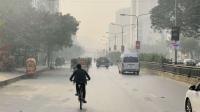
Dhaka’s air quality was classified as ‘unhealthy’ at 7:15am on Sunday (November 30), according to the ranking published by IQAir.
India's Delhi (238), Iraq's Baghdad (229 and Uzbekistan's Tashkent (228) occupied the top three spots on the list, according to IQAir.
Dhaka’s air quality was ranked unhealthy, and the PM2.5 concentration in Dhaka was 19.1 times higher than the WHO annual air quality guideline value.
Read more: Air pollution kills over 100,000 people in Bangladesh annually: Research
An AQI score between 51 and 100 means the air quality is moderate. It is categorised as unhealthy for sensitive groups if the score remains between 101 and 150.
When the score ranges between 151 and 200, it is considered unhealthy. Similarly, an AQI score of 201 to 300 is considered an emergency with health warnings. Any score above 300 is considered to be hazardous.
Being one of the world’s most densely-populated cities in the world, Dhaka has been struggling with poor air quality for a long time. The quality deteriorates further during the summer and winter but improves slightly in the monsoon.
Read more: Dhaka grapples with alarming air pollution levels
A 2019 study by the Department of Environment and the World Bank identified automobile smoke, dust from building sites, and brick kilns as the three primary sources of air pollution in the city.